Side A · The rhythm section

Lessons

Individual lessons for piano, drums, bass and guitar. The emphasis is on learning to read, feel and perform, with the teacher playing along on drums, guitar, bass or piano so every student learns to lock in with a band.

$20 / 30-minute lessonAges vary by instrumentBeginners welcome
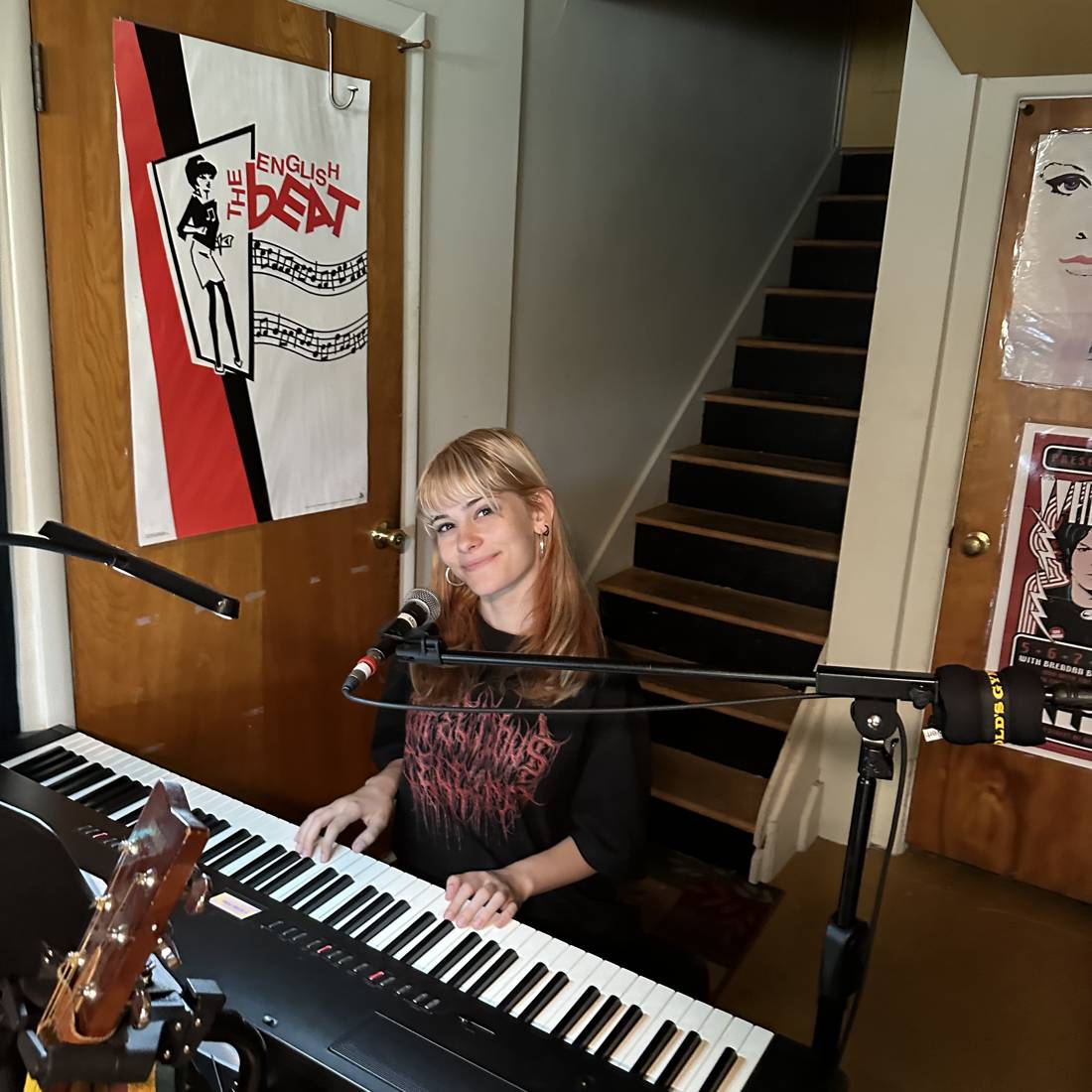
A student at the keyboard in the studioTRACK 01 · START HERE

Piano

The main focus, and really the best place to begin: melody and song structure, with a bonus as a solo instrument. Students learn not to look at their hands, which builds proprioception, and keeping the head up is a good singing habit too. Tempo and feel come from metronome, drum or guitar accompaniment.

Creativity is encouraged. Even small or wacky ideas become songs, and a section of each indoor showcase features students' originals.

Ages 5+ · David Glover method books

Book piano →
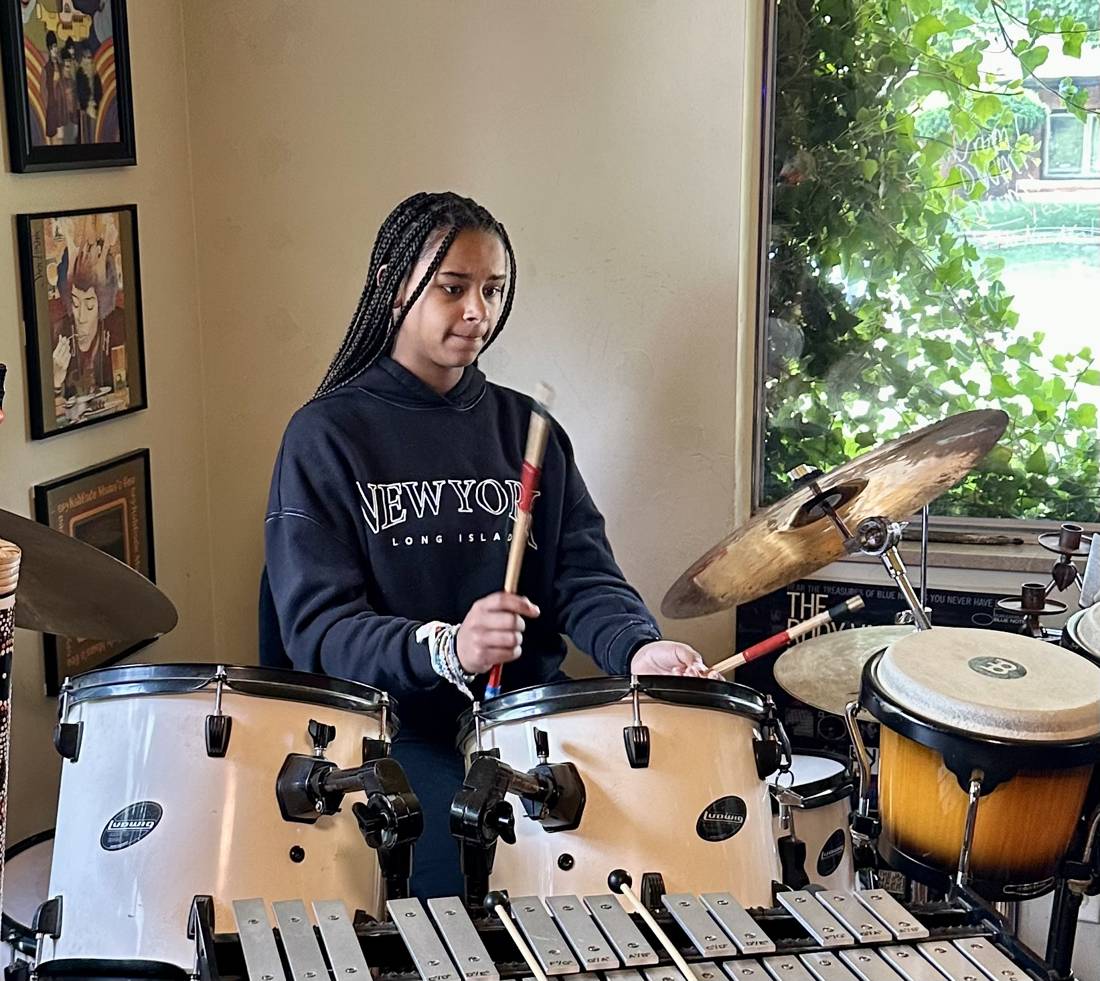
A student playing drums in the studioTRACK 02

Drums

Tempo and timing that create movement and lift the melody. Students start with kick, snare and hi-hat, focusing on hand-and-foot coordination, then build endurance: each one-measure exercise is played for at least a minute at 60 BPM or faster.

The drummer is the boat. Bandmates can fall out, but the drummer keeps the ship sailing. Later, students learn to embellish songs, or just have fun.

Ages 5+ · Slammin' Simon method books

Book drums →
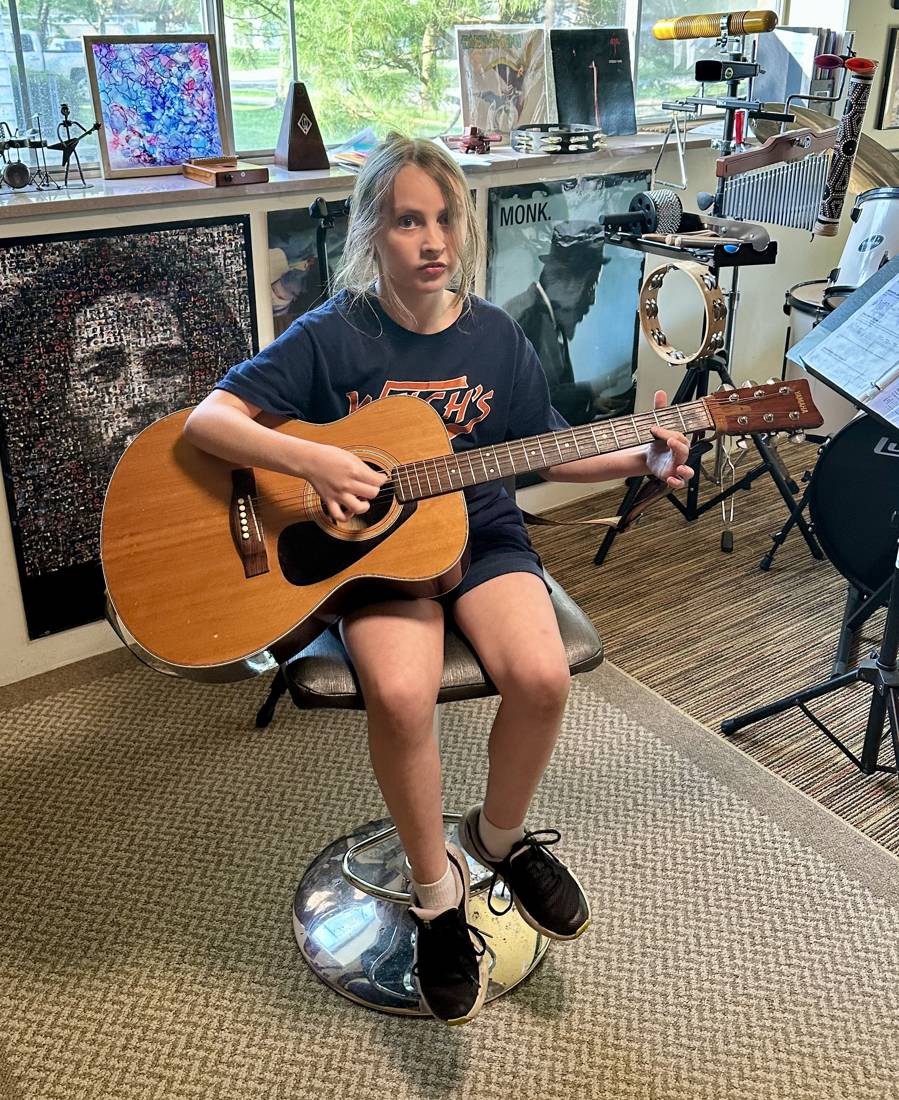
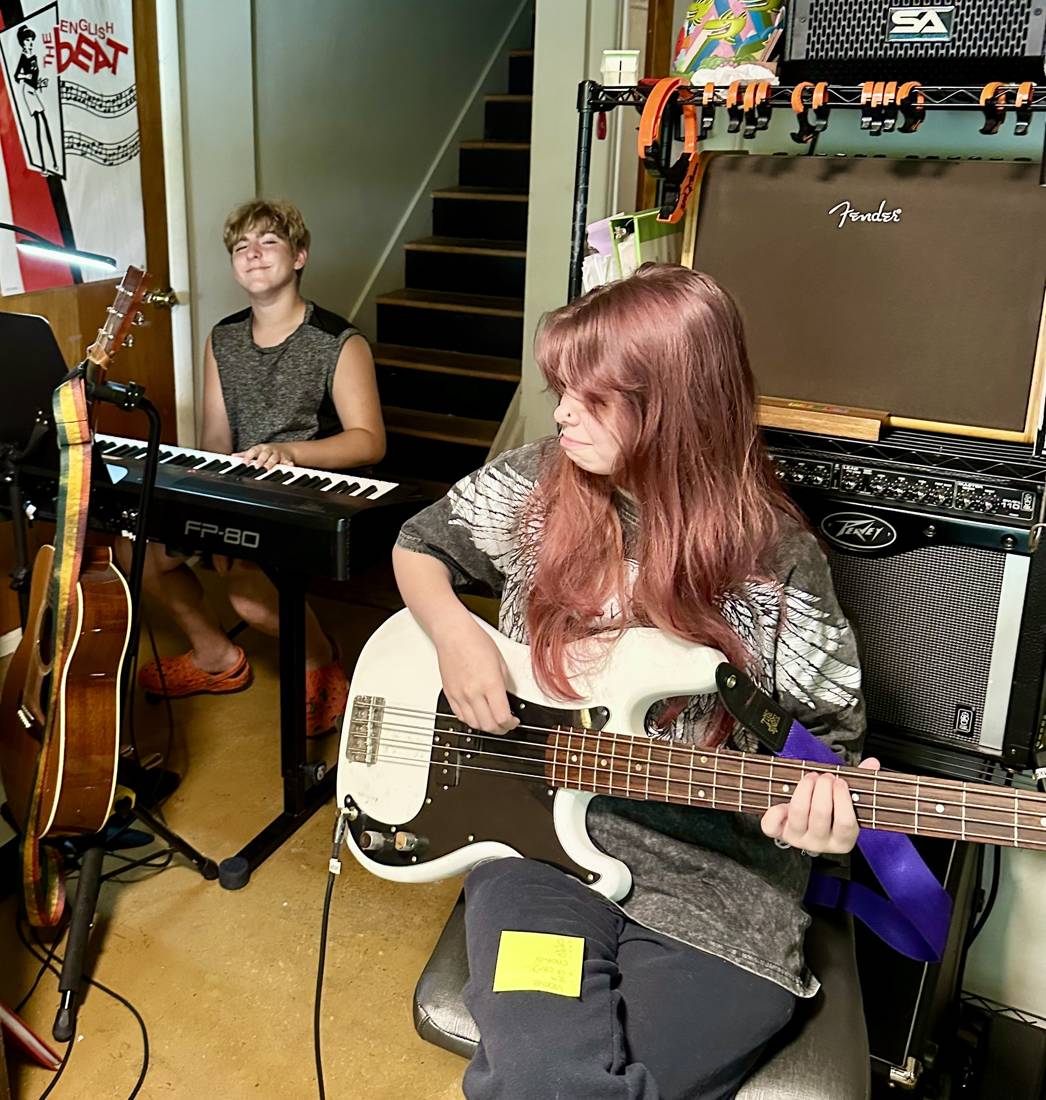
A student playing bass next to an ampA student playing acoustic guitarTRACK 03

Bass & Guitar

Bass: melody, movement and stability. The emphasis is on timing with the drums, then with piano or guitar for rhythm variety. Knowing the letter locations on the neck is a must.

Guitar: melody and song structure, with a bonus as a solo instrument. Electric or acoustic are both welcome. Tuning, letter locations on the neck and the one-finger-per-fret rule apply to both. Each exercise is played for at least a minute at 60 BPM to build stamina for long riffs; Nirvana's "Come As You Are" runs 50 seconds before it changes.

Bass: no minimum age · small-scale basses encouraged for small hands · Hal Leonard Bass Tab method

Guitar: ages 7–8+, once fingers are ready for the strings · Hal Leonard Guitar Tab method

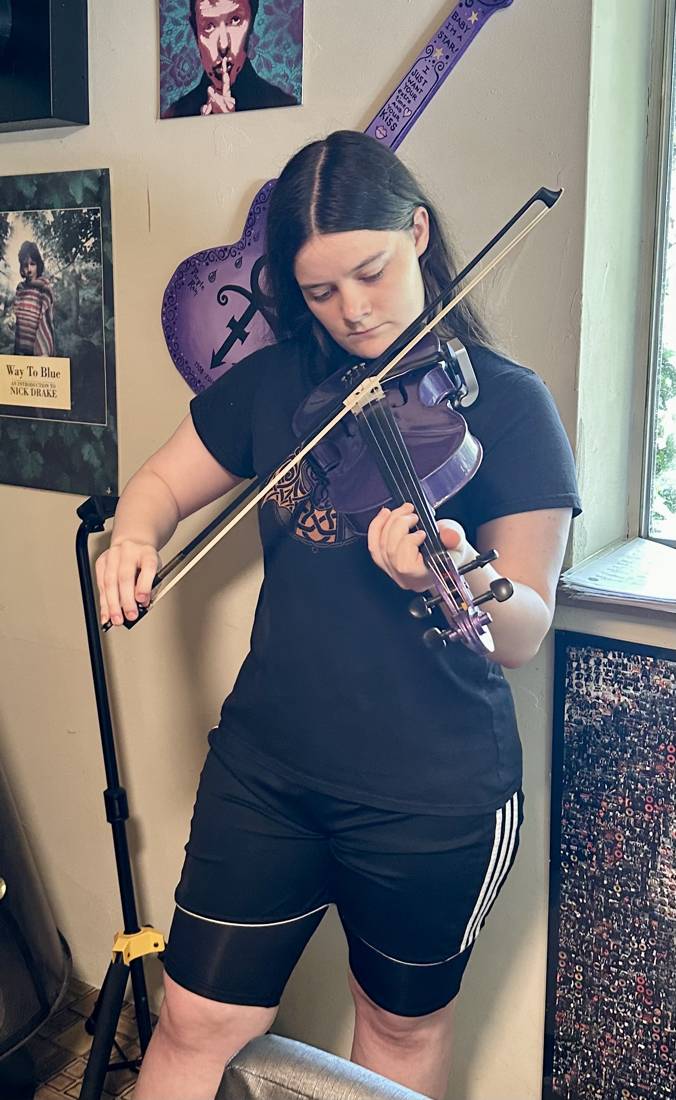
A middle school student practicing violin in the studio

Extracurricular

School band instrument? Bring it.

Middle school is when students meet strings, winds, brass and percussion. Lessons stay within the rhythm section, but the studio owns plenty of band instruments and has helped many students prepare for solo & ensemble on trumpet, flute, bells, violin and more. One or two students also perform their school instrument or piece at each showcase.

How it plays out

Read. Feel. Perform.

  1. 1

    Read

    Method books for every instrument. Converting the page into hands and feet builds real musicianship, and builds the brain too.

  2. 2

    Feel

    The teacher plays along on drums, guitar, bass or piano, so tempo and time signatures are felt, not just counted.

  3. 3

    Play together

    Small groups of students are encouraged to eventually perform together without adult guidance.

  4. 4

    Perform

    Free showcases every June and December at Grand Blanc High School Auditorium, plus the Grand Blanc Art Fair in August. See shows ↗

Pricing

One speed. One price.

33 ⅓ · INDIVIDUAL LESSON $20 per 30 minutes

Showcases are free for students and audiences. Instrument maintenance isn't offered.

Book a first lesson

Questions

What ages do you teach?

Piano and drums start at age 5. Guitar starts around ages 7–8, once fingers are ready for the strings. Bass has no minimum age; small-scale basses are encouraged for small hands.

Which method books do you use?

Piano: David Glover method. Drums: Slammin' Simon. Bass: Hal Leonard Bass Tab method. Guitar: Hal Leonard Guitar Tab method.

Do students have to perform?

Performing is the goal and it's encouraged, never forced. There are two free indoor showcases a year at Grand Blanc High School Auditorium (June and December) and an outdoor set at the Grand Blanc Art Fair in August.

Electric or acoustic guitar?

Both are welcome. Tuning, letter locations on the neck and the one-finger-per-fret rule apply to both.

Can you help with my school band instrument?

I don't teach outside the rhythm section, but I own many band instruments and have helped plenty of middle schoolers prepare for solo & ensemble — trumpet, flute, bells, violin and more.

Do you repair or maintain instruments?

Instrument maintenance isn't offered.

Ready to drop the needle?

Book a first lesson →